Microchanneling Depth Explained: Why .25 mm Beats "Once a Month and Hope"
This is a subtitle for your new post
For nurses and estheticians, a thoughtful depth and schedule can make treatments more consistent. Here’s why a gentle .25 mm protocol every two weeks is a practical starting point.
By Stephanie Holvick, RN, Founder and Owner Educator, RN FACES
If you’re building a microchanneling service, you’ve probably heard two common questions: “How deep should I go?” and “How often should clients come back?” A clear, repeatable protocol helps you answer with confidence, and helps clients understand that skin improvement is a process, not a guessing game.
At RN FACES, we advocate a conservative starting protocol: microchanneling every two weeks at .25 mm, with a suitable targeted serum. The goal is to support serum infusion while respecting the skin’s barrier. It’s not about going deeper or pushing harder. It’s about using a considered approach consistently.
Why start at .25 mm?
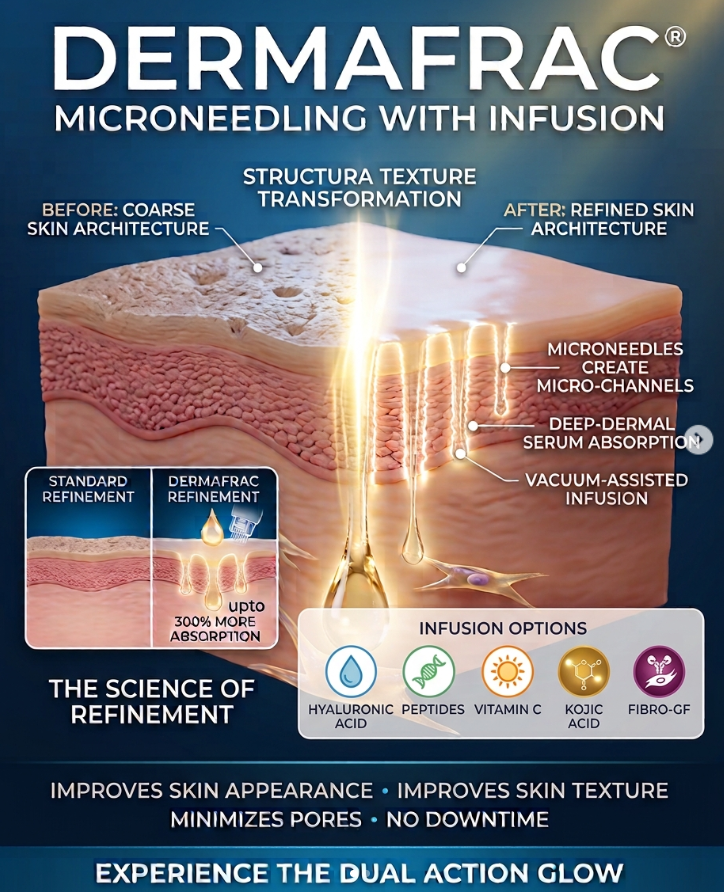
Microchannels temporarily create pathways through the skin’s outer barrier, helping a suitable topical product reach beyond the surface. A .25 mm setting is a shallow approach intended to support delivery around the superficial layers, near the dermal-epidermal interface, where active ingredients may be useful.
One important note for providers: a device’s depth setting is not a guarantee of the exact anatomical depth reached in every client. Skin, technique, pressure, and equipment all matter. Present .25 mm as a conservative protocol, not a promise that every channel lands at a precise layer.
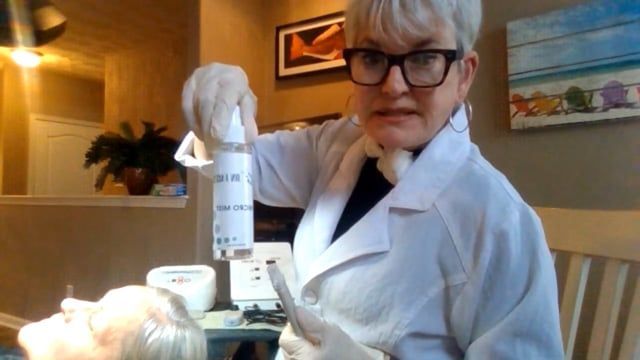
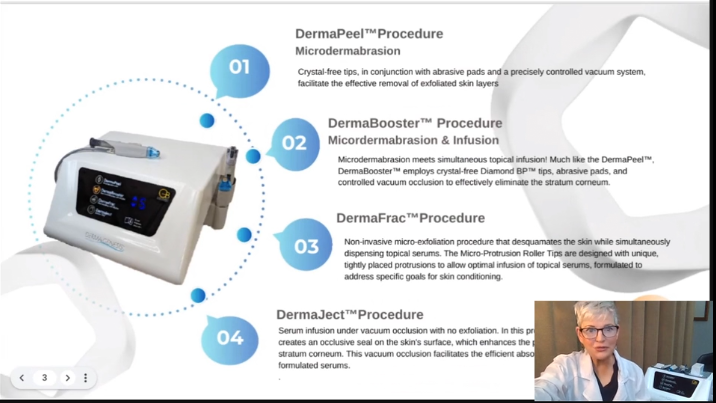
The treatment should be controlled and comfortable, not aggressive. DermaFrac uses vacuum occlusion to draw skin evenly toward the handpiece as it creates channels and infuses serum. Comfort varies by client, so check in throughout the treatment and follow your training and device instructions.
Why every two weeks instead of “once a month and hope”?
A schedule gives you and your client a plan to follow. A small randomized split-face study examined five treatments spaced two weeks apart using a .25 mm roller. It found improved appearance in the side treated with micro-needling and a specific conditioned-medium product compared with saline. The study supports that this interval has been explored; it does not prove that every serum or client will have the same results, or that two weeks is best for everyone. Read the study.
Another facial study found temporary changes to skin-barrier measurements after shallow microneedling, with recovery within 72 hours. That’s encouraging context for a two-week interval, but it isn’t a guarantee of safety for every person or a substitute for assessment and sound practice. Read the study.
For clients who are appropriate candidates, a two-week rhythm can help you monitor how their skin responds, reinforce home-care guidance, and adjust the plan when needed. “Consistent and conservative” is a better promise than “more depth, more results.”
A simple practitioner checklist
- Assess before treating. Postpone treatment on irritated, infected, inflamed, sunburned, or otherwise compromised skin.
- Choose products carefully. Use only products appropriate for the device and intended for application with microchanneling. A temporarily more permeable barrier is not the time to improvise with irritating products.
- Use a clear cadence. Start with .25 mm every two weeks when appropriate, then reassess skin response and follow your training, device directions, and local scope of practice.
- Set realistic expectations. Explain that results vary and often depend on a series of treatments and suitable home care.
The takeaway is simple: a deliberate .25 mm approach and a planned two-week schedule can give your treatment series structure. It’s a calmer alternative to “once a month and hope”, and a good way to keep client conversations grounded in care, consistency, and realistic expectations.
Want to build your protocols with confidence? Explore RN FACES training, professional equipment, and our guide to serum selection and infusion.